Quick Answer
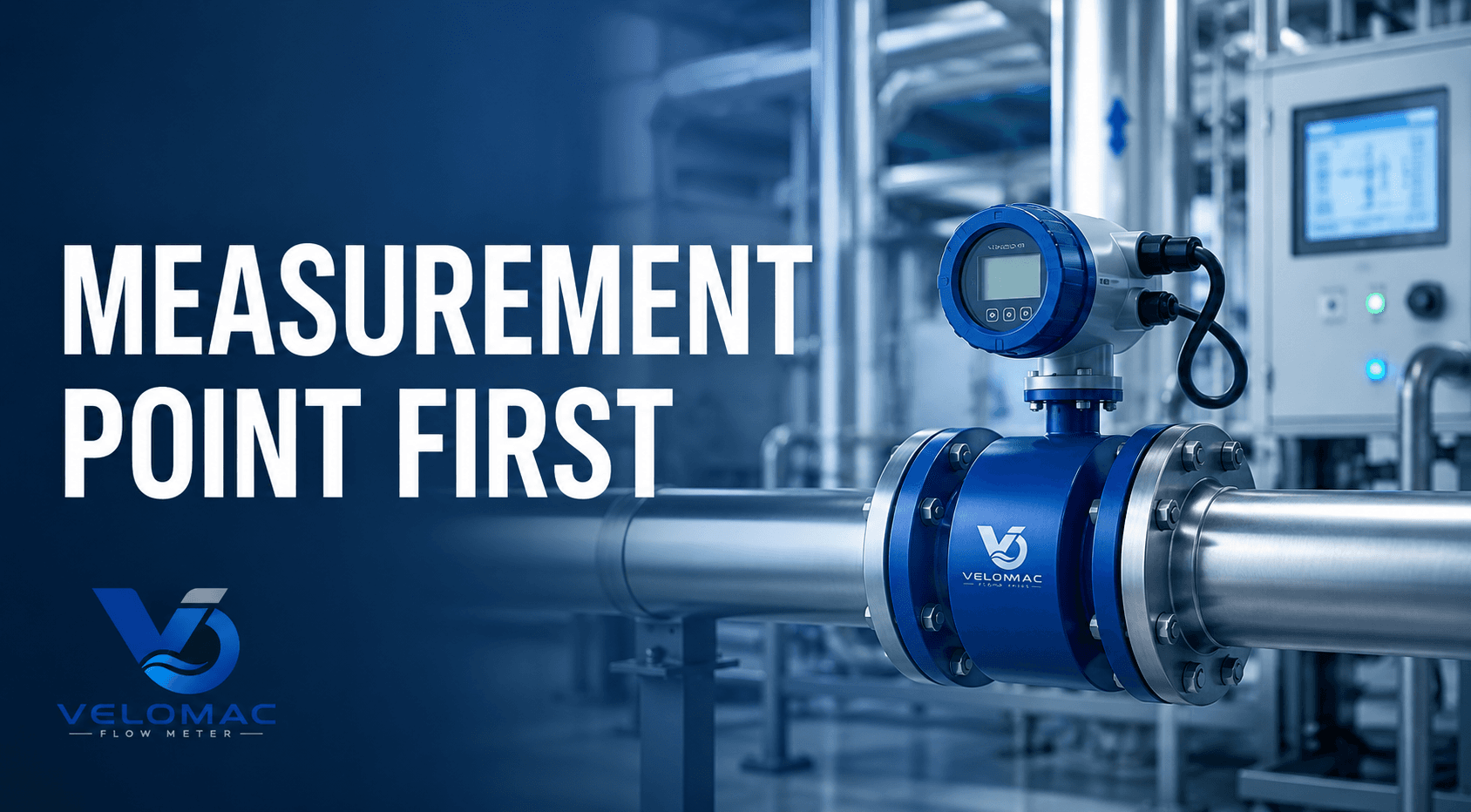
Faster instrument communication can move more information across a plant, but useful flowmeter data still begins at the physical measurement point.
Before choosing a communication method, plant teams should confirm that the selected location represents the required process flow, the instrument covers the actual operating range, and every transmitted value has a defined engineering purpose.
What Flowmeter Data Quality Means
Flowmeter data quality describes how well the reported flow value represents the process condition that engineers need to control, monitor, record, or calculate.
It depends on several connected factors:
The selected measurement point
The actual operating flow range
The medium and its physical properties
Lining and electrode compatibility
Pipe and installation conditions
Grounding conditions
Signal configuration
The way the PLC, DCS, historian, or maintenance team uses the data
Communication speed controls how quickly information moves.
The measurement point determines the quality and usefulness of the underlying process value.
Why the Measurement Point Comes Before Connectivity
A connected instrument network transfers the value generated at the field measurement point.
That value begins with the physical conditions inside the pipe.
Plant teams should confirm:
The measurement point represents the process flow the plant needs to understand
The pipe remains full during normal operation
Minimum, normal, and maximum flow are available
The selected range covers low-flow and peak-flow conditions
Valves, elbows, pumps, reducers, and branches are identified
Gas bubbles, solids, coating, and deposits are understood
Grounding conditions are correctly prepared
The location is accessible for commissioning and maintenance
When these conditions are clearly defined, digital connectivity can make the measurement easier to access, interpret, and manage across the plant.
Where This Issue Appears in Real Projects
This issue often appears in chemical plants, petrochemical utilities, water treatment systems, plant digitalization projects, and connected production lines.
A project may begin with communication architecture, remote diagnostics, or plantwide data integration while important field information is still incomplete.
The engineering team may still need to confirm:
Whether the liquid has sufficient conductivity
Whether the lining suits the chemical composition
Whether the electrode material matches the corrosive medium
Whether the meter location is close to a valve, elbow, pump, or reducer
Whether the pipe remains full throughout operation
Whether commissioning and reduced production create low-flow conditions
Whether diagnostic information has an assigned user
Whether the flow value supports control, maintenance, energy accounting, or production records
These details determine whether the transmitted information can support real plant decisions.
Flowmeter Data Quality in Chemical Process Measurement
Chemical process lines often combine difficult media with increasingly connected control systems.
A conductive acid, alkaline liquid, process water stream, or wastewater line requires more than a general communication specification.
The application review should also cover:
Chemical composition
Liquid conductivity
Concentration
Corrosion characteristics
Operating temperature
Operating pressure
Lining material
Electrode material
Pipe-full conditions
Grounding
Flow range
Installation position
Required signal output
A faster network can make these values available across the plant.
Correct application review makes the primary flow value useful.
More Parameters Need Clear Engineering Uses
A modern instrument may provide a primary flow signal, totalized flow, device status, configuration information, and diagnostic values.
The project team should define the purpose of each value before adding it to the plant system.
Process Control
The primary flow signal may support:
Valve control
Chemical dosing
Batching
Process balance
Production adjustment
Utility distribution
Maintenance
Device and diagnostic information may support:
Instrument condition review
Pipe condition review
Empty-pipe indication
Signal change investigation
Maintenance planning
Commissioning checks
Energy and Utility Accounting
Flow data may support:
Internal utility allocation
Consumption monitoring
Production comparison
Water balance
Wastewater tracking
Energy management
Quality and Production Records
A historian may record flow information for:
Batch records
Production review
Process traceability
Material balance
Shift comparison
Quality documentation
Remote Monitoring
System integrators and instrumentation teams may use connected data for:
Centralized device review
Configuration access
Commissioning support
Diagnostic review
Plantwide monitoring
Maintenance coordination
Each transmitted value should have:
A defined engineering purpose
A responsible user or department
A review frequency
A response rule
A clear destination in the plant system
This structure turns additional instrument data into useful engineering information.
When Standard Flowmeter Outputs Are Enough
Many industrial projects can meet their control and monitoring needs with established signal outputs.
4–20 mA can transmit a continuous flow value to a PLC or DCS
Pulse output can support batching, counting, and totalization
RS485 / Modbus can transmit digital values to control systems, gateways, local displays, or packaged equipment
These outputs can suit:
Chemical process lines
Water treatment systems
Wastewater systems
Plant utility lines
Skid systems
OEM equipment
Retrofit projects
Local automation systems
More complex connectivity becomes useful when a large facility requires:
Wider access to field instruments
Centralized diagnostic information
Faster commissioning workflows
Asset management integration
Plantwide data visibility
Remote access to configuration and device status
The communication method should match the project scale, system architecture, and actual data requirements.
Where Ethernet-APL Can Add Value
Ethernet-APL can support high-speed digital communication between field instruments and process automation systems.
Its value may be relevant in large plants that require:
Wider instrument connectivity
Faster access to device information
Centralized diagnostics
Remote configuration
Plant asset management
Large-scale system integration
Connected commissioning workflows
The communication layer should be selected after the process conditions and measurement point have been reviewed.
This keeps the project focused on both field measurement quality and digital integration.
Electromagnetic Flowmeter Application Conditions
An Electromagnetic Flowmeter may be relevant for conductive liquids in chemical process lines, industrial water systems, wastewater treatment, and selected petrochemical utility applications.
Before selection, engineers should review:
Liquid name
Chemical composition
Conductivity
Concentration
Corrosiveness
Operating temperature
Maximum temperature
Operating pressure
Maximum pressure
Pipe size
Pipe material
Minimum flow
Normal flow
Maximum flow
Pipe-full conditions
Gas bubbles
Solids or deposits
Lining requirements
Electrode requirements
Grounding conditions
Installation orientation
Nearby valves, elbows, pumps, and reducers
Required signal output
The suitability of an Electromagnetic Flowmeter depends on the complete process and installation conditions.
Material Compatibility Determines the Base Measurement
In an Electromagnetic Flowmeter, the lining and electrodes are exposed to the conductive liquid.
Material selection should therefore consider:
Chemical composition
Chemical concentration
Operating temperature
Corrosion characteristics
Cleaning chemicals
Operating duration
Process changes
Possible deposits or coating
A material selected for industrial water may require a different review when the line carries concentrated acid, alkaline liquid, or an aggressive chemical mixture.
Lining and electrode selection should be completed as part of the application review before ordering.
Low-Flow Operation Must Be Included in Sizing
A flowmeter may be selected around maximum flow while the process operates closer to minimum or normal flow during much of the production cycle.
Low-flow conditions may appear during:
Plant commissioning
Small production batches
Cleaning cycles
Reduced production demand
Seasonal operation
Utility standby conditions
Process changeovers
Partial plant operation
Engineers should provide minimum, normal, and maximum flow before selection.
This allows the selected range to reflect actual plant operation rather than only the pipe size or peak design condition.
Installation Conditions Affect the Flow Value
The measurement point should be reviewed together with the surrounding pipe arrangement.
Important installation details include:
Upstream pipe layout
Downstream pipe layout
Control valves
Isolation valves
Elbows
Pumps
Reducers
Branch connections
Pipe orientation
Pipe-full conditions
Bubble accumulation
Vibration
Grounding
Available installation space
Maintenance access
A pipe drawing, layout sketch, or clear installation photo can help identify possible measurement issues before the instrument is ordered.
What Engineers Should Prepare
Before requesting an Electromagnetic Flowmeter quotation or application review, prepare:
Medium name
Chemical composition
Conductivity
Concentration
Corrosiveness
Pipe size
Pipe material
Minimum flow
Normal flow
Maximum flow
Operating pressure
Maximum pressure
Operating temperature
Maximum temperature
Pipe orientation
Pipe-full condition
Lining preference when already specified
Electrode preference when already specified
Grounding conditions
Available installation space
Nearby valves, elbows, pumps, reducers, and branches
Required output such as 4–20 mA, pulse, or RS485 / Modbus
PLC, DCS, gateway, or historian requirements
Purpose of the flow data
Providing this information early helps the technical review focus on the actual process and measurement point.
How Flowmeter Data Quality Affects Selection
A connected flow measurement project should follow a clear engineering sequence.
Define what the plant needs to measure
Confirm why the flow value is needed
Identify a representative measurement point
Confirm the medium and conductivity
Provide minimum, normal, and maximum flow
Review pressure and temperature
Match lining and electrode materials to the medium
Review pipe layout and grounding
Define the required flow signal
Select the diagnostic values that will be used
Assign responsibility for alarms and diagnostic information
Select the communication method
This sequence keeps the physical measurement task at the center of the project.
Which Approved Velomac Product May Be Relevant
Electromagnetic Flowmeter
The Electromagnetic Flowmeter may be considered for conductive liquids in:
Chemical process lines
Acid and alkaline liquid applications
Industrial water systems
Wastewater treatment
Plant utility lines
Process automation projects
Application suitability should be reviewed using:
Medium
Conductivity
Corrosiveness
Flow range
Temperature
Pressure
Lining
Electrodes
Grounding
Installation position
Required signal output
The communication interface should be selected together with the process and control-system requirements.
What Velomac Reviews
Velomac provides manufacturer-direct application review before flowmeter selection.
The review can include:
Medium
Chemical composition
Conductivity
Pipe size
Flow range
Pressure
Temperature
Lining
Electrodes
Corrosion conditions
Grounding
Installation space
Nearby pipe fittings
Required signal output
PLC or DCS integration requirements
This review helps engineers, EPCs, system integrators, and plant teams clarify the measurement point before ordering.
Practical Checklist
Before approving the flowmeter and communication specification, check:
The measurement point represents the required process flow
Minimum, normal, and maximum flow are confirmed
Low-flow operation is included in sizing
The liquid conductivity is known
Lining and electrodes match the medium
Temperature and pressure are confirmed
The pipe remains full
Bubble and solids risks are reviewed
Grounding requirements are defined
Nearby valves, elbows, pumps, and reducers are mapped
Installation and maintenance space are available
Each transmitted parameter has a clear purpose
Diagnostic alarms have an assigned owner
The output method matches the control-system requirements
The communication method matches the project scale
Common Questions
Does Faster Communication Improve the Flow Value?
Faster communication provides quicker access to the flow value and diagnostic information.
The base measurement still depends on the medium, sizing, materials, grounding, installation, and process conditions.
Does Every Flowmeter Need Advanced Digital Connectivity?
The required connectivity depends on the project.
Many control, totalization, skid, utility, and retrofit applications can use 4–20 mA, pulse, or RS485 / Modbus.
What Should Be Checked First for an Electromagnetic Flowmeter?
Confirm the liquid conductivity, pipe-full condition, flow range, lining, electrode material, grounding, pressure, temperature, and installation position.
Why Is Minimum Flow Important?
The line may operate near minimum flow during commissioning, small batches, cleaning, reduced production, or standby operation.
This condition should be included in sizing.
Who Should Review Diagnostic Alarms?
The plant should assign each useful alarm to a specific operations, maintenance, or automation team and define the required response.
Build the Measurement Point Before the Data Layer
Plant digitalization creates more value when field measurement and data architecture are developed together.
If your team is reviewing a conductive liquid measurement point, Velomac can help check the medium, range, materials, grounding, installation conditions, and signal requirements before selection.